
What is a Digital Marketing Funnel and How to Optimize It?
A funnel isn’t just a diagram marketers throw around. It’s the logic behind how people become customers. When teams treat a funnel as a checklist — “we have ads, email, and content” — they miss where prospects actually drop off. This blog explains what a digital marketing funnel really is, and how to optimize it so more prospects convert into paying customers.
Let’s be honest for a second
You’ve probably heard the term digital marketing funnel a hundred times. Maybe it came with diagrams, arrows, and fancy terms like “TOFU, MOFU, BOFU.”
But what does it actually mean?
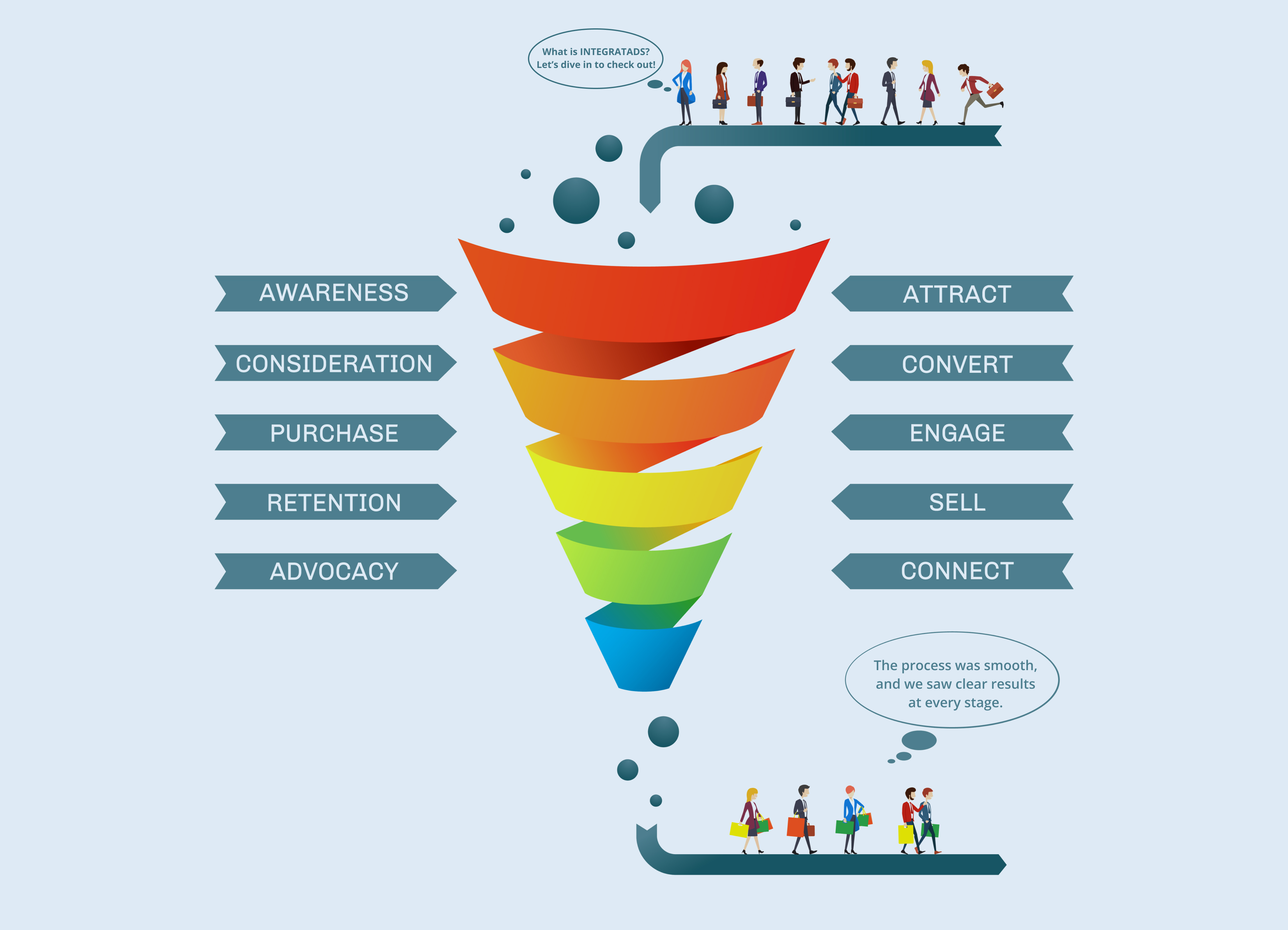
At its core, a digital marketing funnel is a framework that maps the stages a prospective customer goes through — from first discovering your brand to becoming a loyal buyer.
It’s not just a chart.
It’s a strategy.
When a funnel is optimized, every stage becomes more efficient. When it’s not, your traffic might as well be random noise.
The classic funnel explained (the real meaning)
Most marketers break the funnel into three major stages:
Awareness – People discover you.
Consideration – People compare options.
Conversion – People buy, subscribe, or take the action you want.
This is taught widely because it reflects real decision-making behavior. HubSpot’s marketing framework describes these same stages as buyer journey phases, and shows why content, messaging, and offers need to change per stage, not stay static.
Source: https://www.hubspot.com/
Treating the funnel like a linear checklist (“ads here, email there”) misses the nuance of how humans actually think and decide.
Why most funnels leak — and where prospects disappear
If your funnel feels like a sieve — lots of traffic, few conversions — you’re experiencing leakage. That means prospects are falling through gaps between stages.
Common leak points:
Issue in Awareness
Your audience doesn’t recognize your value because messaging is not aligned with their needs or intent. Google’s insights on search behavior indicate that relevance — not frequency — drives discovery performance.
Source: https://support.google.com/g.....oogle-ads/
Issue in Consideration
You have traffic, but they don’t engage deeper. This usually happens when there’s no clear value proposition or when content doesn’t answer why you vs everyone else.
Issue in Conversion
You get clicks, but little action. Often this comes from unclear CTAs, too long a path to buy, or lack of trust signals. Research by the Nielsen Norman Group highlights that simplicity, clarity, and trust are core to conversion usability.
Source: https://www.nngroup.com/articles/why-users-leave/
Fixing leak points is not a guessing game. It’s a systematic optimization process.
How to optimize your funnel (the real strategy)
The secret most teams miss is this:
Funnels are not optimized by increments.
They are optimized by removal of friction and amplification of clarity.
Here’s how to do it:
1. Map real user intent at every stage
Awareness is not just “traffic.”
It’s qualified interest.
You must understand what your audience is actually looking for at each step.
Tools like Google Search Console help you see what people are searching for and how that aligns with your messaging.
Source: https://search.google.com/se.....h-console/
When your content answers exact questions your audience is asking, you improve relevance and engagement.
2. Audit friction points with data (not opinions)
Heatmaps, funnel analytics, session recordings, and conversion flows show exactly where people hesitate.
If data shows a sudden drop at a page or action, that’s not a design problem — it’s a decision problem.
Decision problems are solved with clarity, not gimmicks.
This aligns with findings from conversion research: clarity improves conversion more than ornamentation ever will.
Source: https://www.smashingmagazine.com/2021/07/ux-strategies-conversions/
3. Align offers and CTAs with stage intent
The call-to-action must match the user’s readiness:
• At Awareness: Get on the list
• At Consideration: Try a demo, book a consult
• At Conversion: Buy now, secure your spot
When the CTA outruns the intent (“Buy now!” in Awareness), conversions collapse because trust isn’t built.
4. Measure what matters — revenue signals, not vanity metrics
Clicks matter, but they don’t pay the bills. The real funnel optimization happens when you link your funnel metrics directly to revenue outcomes.
HubSpot’s research confirms that revenue-aligned metrics consistently correlate with higher growth trajectories when compared to engagement-only metrics.
Source: https://research.hubspot.com/
Far too many teams optimize for views, impressions, and social likes — and later wonder why growth feels flat.
Real teams outperform because they think in systems
A well-tuned funnel is not a series of steps, but a system that:
• Attracts the right audience
• Educates them efficiently
• Guides decision confidently
• Removes purchase barriers
• Reinforces trust at every touchpoint
When all parts work together, conversion lifts happen not by accident — by design.
Frequently Asked Questions
Read more
How To Optimize A Google Business Listing
Most Google Business listings exist. Very few perform. If your profile isn’t driving calls, direction requests, or real leads, it’s not optimized — it’s just indexed. This guide breaks down exactly how to optimize your Google Business listing so it shows up, stands out, and converts.
What is Page Speed and How to Improve It?
Page speed is not a technical detail. It is a revenue lever. If your site loads slowly, users bounce, conversions drop, and Google quietly pushes you down the rankings. This guide explains what page speed actually means, why it matters for SEO and conversions, and how to improve it without breaking your site.

What are the Best AI Marketing Tools in 2026?
AI marketing tools are everywhere, but most businesses are still overwhelmed, underperforming, or using them wrong. In 2026, the winners won’t be the companies using the most AI tools — they’ll be the ones using the right tools with clear strategy. This guide breaks down the AI marketing tools that actually matter and how to use them intelligently.